Learn everything you need to know about NVH analysis and the importance of measurement technology, including application examples on rotating machines
NVH analysis (noise, vibration, harshness) is a crucial process in modern product development and maintenance. It involves investigating and optimizing noise, vibration, and the subjective perception of harshness in systems. The aim is to improve product quality, comply with legal emission limits, and extend the mechanical service life of components.
The focus is on identifying sources of interference and their transmission paths. Whether it's the whistling of an electric drive, the humming of a pump, or the imbalance of a rotating shaft, NVH phenomena are often signs of energy loss or impending wear. A well-founded analysis enables:
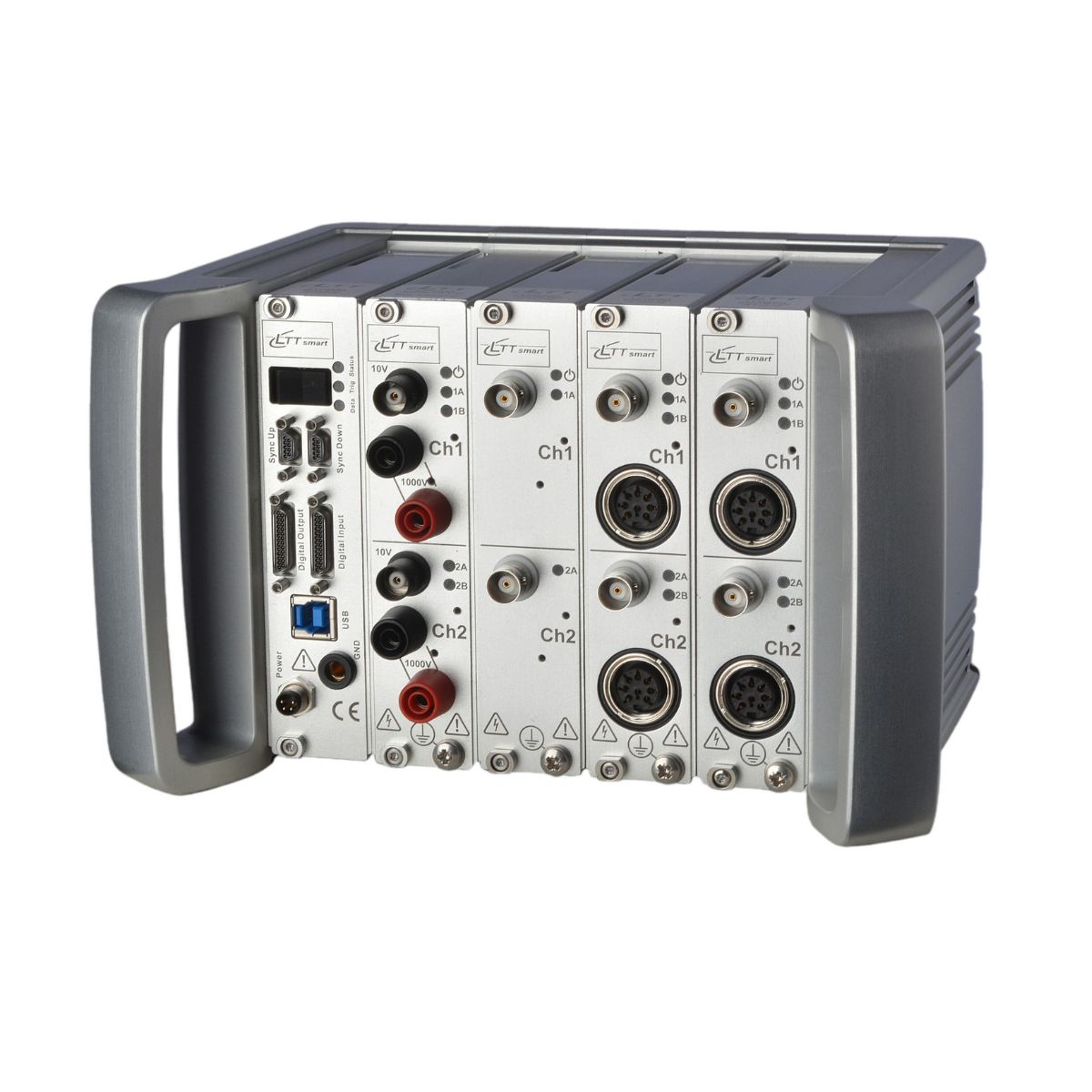
To make NVH data usable, a chain of high-precision hardware and powerful software is required. Modern data acquisition systems (DAQ systems) such as the LTTsmart form the core of this chain:
NVH analysis is used wherever mechanics and dynamics meet:
Imbalance is a condition in which the mass distribution of rotating components, such as the crankshaft, flywheel, or fan, is uneven. This leads to unwanted vibrations and reduced engine performance. It is therefore crucial to detect and correct rotor imbalance to ensure smooth operation and prevent possible damage to the engine.
There are many possible causes of rotor imbalance, including manufacturing variations, wear, accumulation of deposits, damage or misalignment of components, and installation errors. These factors can contribute to motor rotor imbalance and require careful monitoring and maintenance.
The benefits of correct rotor imbalance correction are manifold. In addition to improving the performance and efficiency of the machines, their service life can also be extended. This leads to greater operational reliability and can ultimately save costs by avoiding expensive repairs and downtime. Rotor imbalance correction is therefore a critical aspect of machine and plant maintenance that must not be neglected. It contributes significantly to reliability and efficiency in industrial operations.
Specialized knowledge and equipment are required to perform rotor imbalance correction. Technologies such as balancing machines and vibration analyzers play a crucial role in this process. They enable precise diagnosis and correction, which is essential for maintaining the operational readiness and performance of rotating machines. However, the most important thing is to have the right measurement technology so that valid measurement data can be collected and analyzed in the first place, enabling corrections to be made in the next step if necessary. This is exactly where NVH analysis using LTTsmart comes into play. This is exactly where NVH analysis using LTTsmart comes into play.
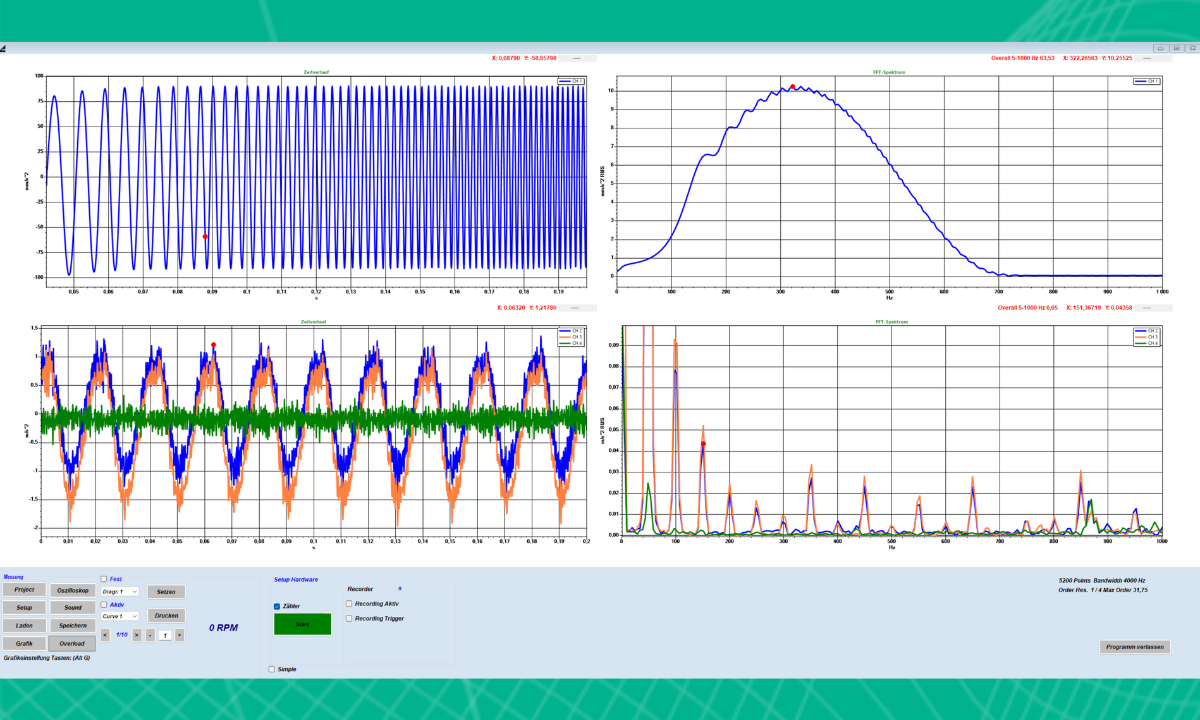
When it comes to noise, vibration, and harshness, the quality of the raw data is the foundation of any valid statement. The combination of the LTTsmart measurement system and the LTTpro software offers a level of performance that far exceeds standard solutions.
The LTTsmart is no ordinary data logger, but a high-performance transient recorder system. It offers decisive advantages for NVH analysis:
The LTTpro software makes hardware power controllable. It serves as a link between the sensors and in-depth analysis:
Why this team is perfect for NVH: NVH problems are often fleeting and complex. The combination offers the hardware speed needed to capture every detail and the software stability to handle huge amounts of data efficiently. It bridges the gap between physical events and informed engineering decisions.