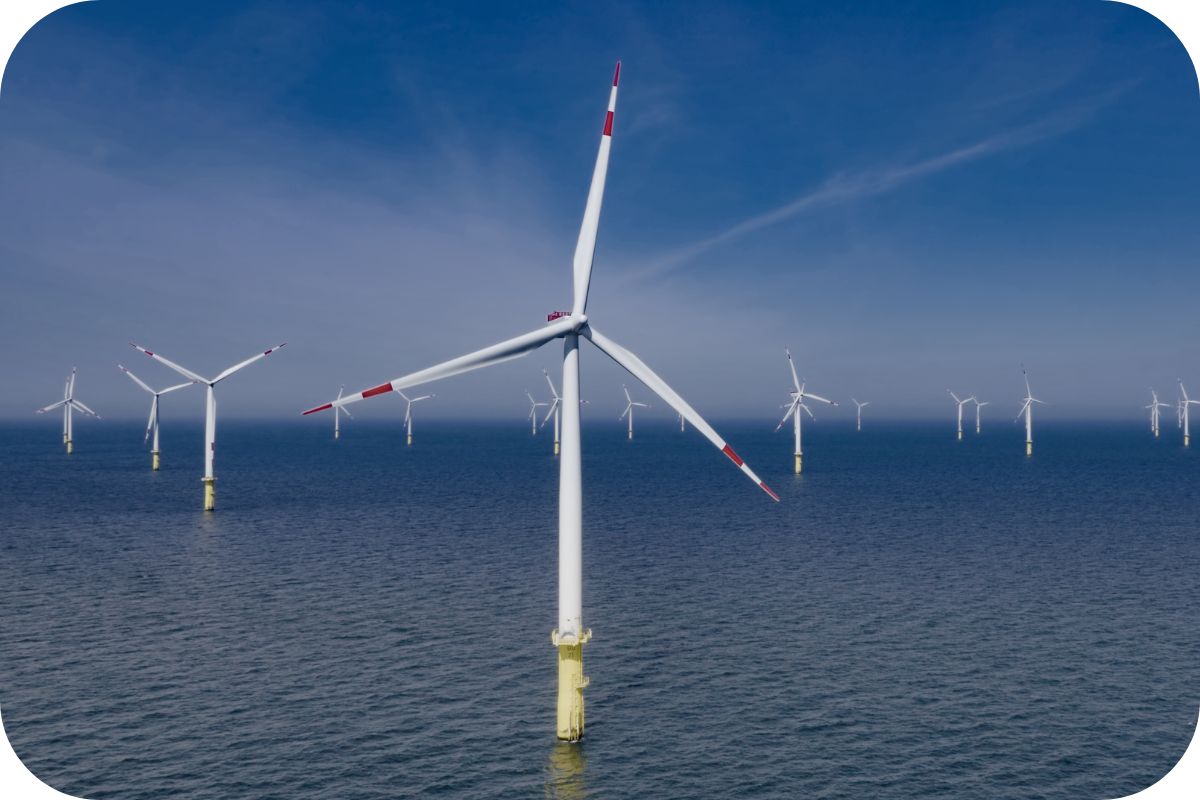
Offshore wind farms are currently one of the key drivers of growth in the global energy transition. There are solid physical and economic reasons why they are so “in vogue”:
Despite the positive environmental impact, the construction of these facilities—particularly the foundation work—represents a massive disruption to the marine ecosystem.
Most facilities are anchored in the seabed using impulse piling. In this process, a hydraulic hammer strikes the steel piles (monopiles). Since water conducts sound much faster and more efficiently than air, these extremely loud sound waves travel over distances of several kilometers.
To minimize this damage, the use of modern hydroacoustic measurement technology is now required by law. Sensors and hydrophones continuously monitor sound levels during the construction phase.
This data makes it possible to adjust the intensity of the pile-driving blows in real time or to optimally control sound-dampening systems such as the large bubble curtain (a curtain of rising air bubbles that refracts the sound). The measurement technology thus serves as an early warning system: If a threshold value is exceeded, work must be suspended until the marine life has safely left the danger zone.
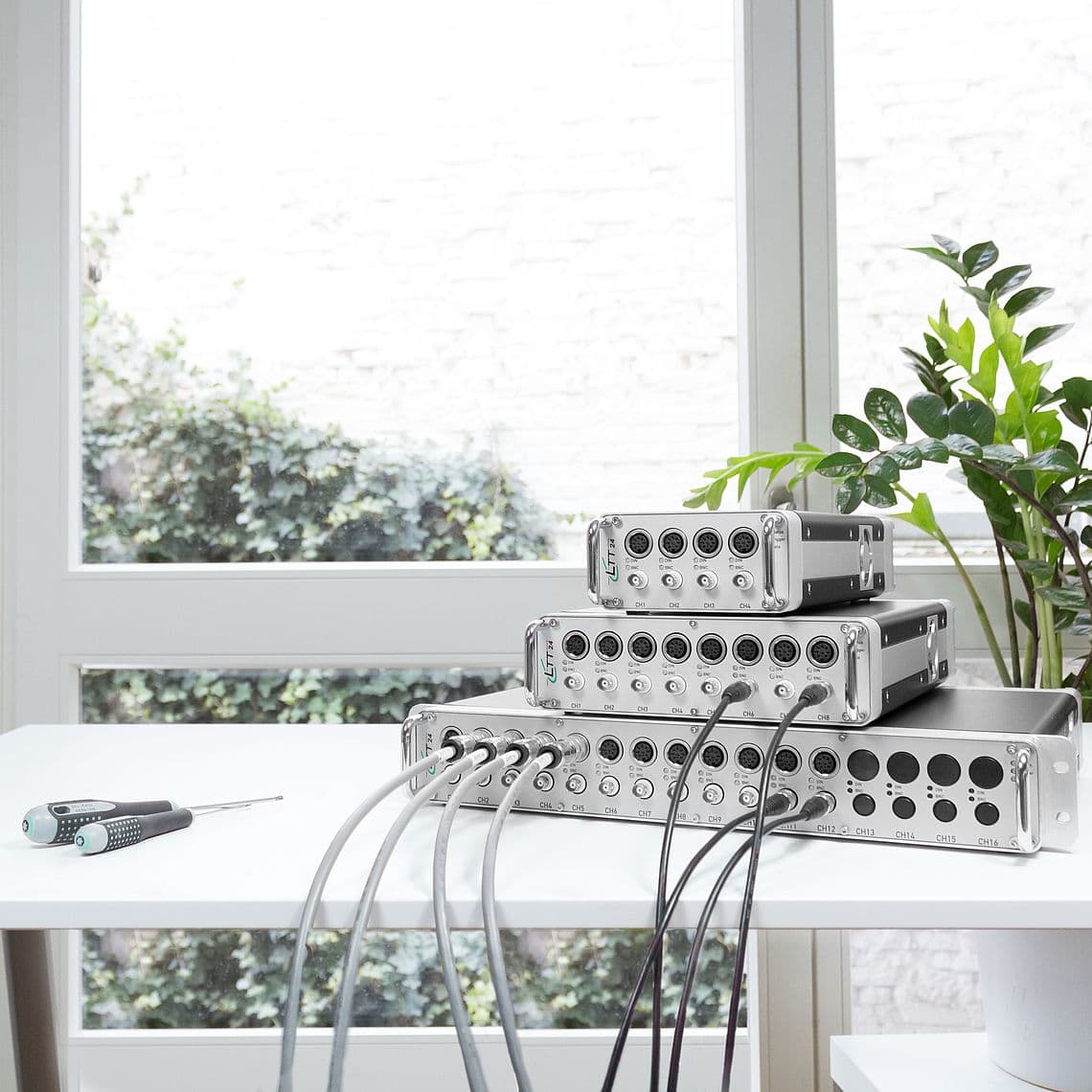
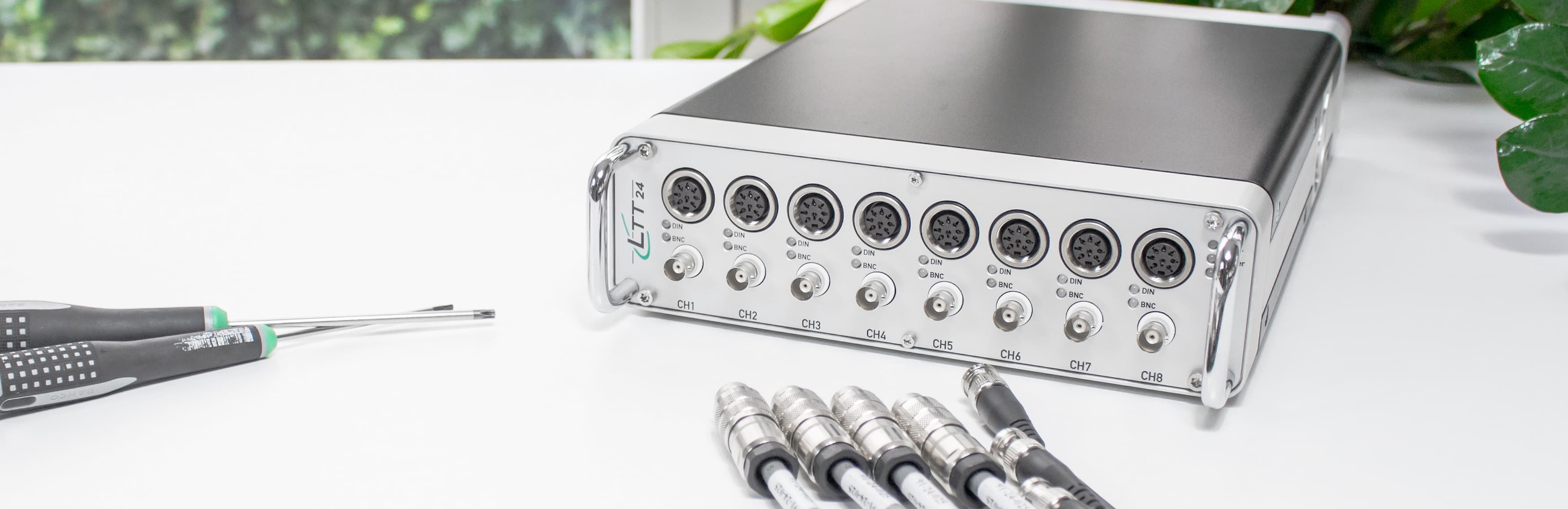
Since extremely precise and fast measurement data acquisition systems are required here for transient measurement events, the LTT24 is the ideal measuring instrument. Learn more below in our application report on the construction of offshore wind farms.