Learn the basics of PWM for electric drives and the requirements this places on measurement technology
Pulse width modulation (PWM) is a digital control method in which a constant DC voltage is rapidly switched on and off to simulate a variable average analogue voltage. The resulting signal consists of a square wave with a constant frequency, the ratio of the on-time (pulse width) to the period – known as the duty cycle – can be varied. If, for example, this duty cycle is 50 per cent, the voltage is switched on for half the time, meaning that a connected load receives, on average, only half the maximum power.
As modern semiconductor switches such as MOSFETs either conduct fully or are completely off, this method operates extremely efficiently and minimises power loss in the form of heat compared to analogue linear regulators. The inertia of the controlled system – such as the inductance of a motor or the thermal inertia of a heater – smooths out the rapid voltage fluctuations, so that the load responds as if to a genuine analogue voltage. The main applications of PWM are speed control of DC motors, LED dimming, and signal transmission and voltage regulation in switching power supplies.
Pulse-width modulation is a highly efficient method for precisely controlling the speed and torque of electric motors. Instead of linearly regulating the voltage—which would result in high losses—the supply voltage is switched on and off extremely rapidly. By varying the duty cycle (the ratio of on-time to off-time within a cycle), the average voltage applied to the motor can be continuously adjusted. This enables low-loss control, which is essential for modern electric drives.
PWM is the key to the efficiency of modern electric drives in e-mobility and industrial applications. Without PWM, energy-efficient torque and speed control would be virtually impossible. Thanks to the high switching frequency, electrical energy is modulated so that the motor delivers exactly the required power without losing excess energy as heat. This maximizes the range of electric vehicles and the service life of drive components.
Measuring PWM signals is a major challenge because the resulting voltage and current waveforms are not clean sine waves, but rather steep-edged square-wave signals.
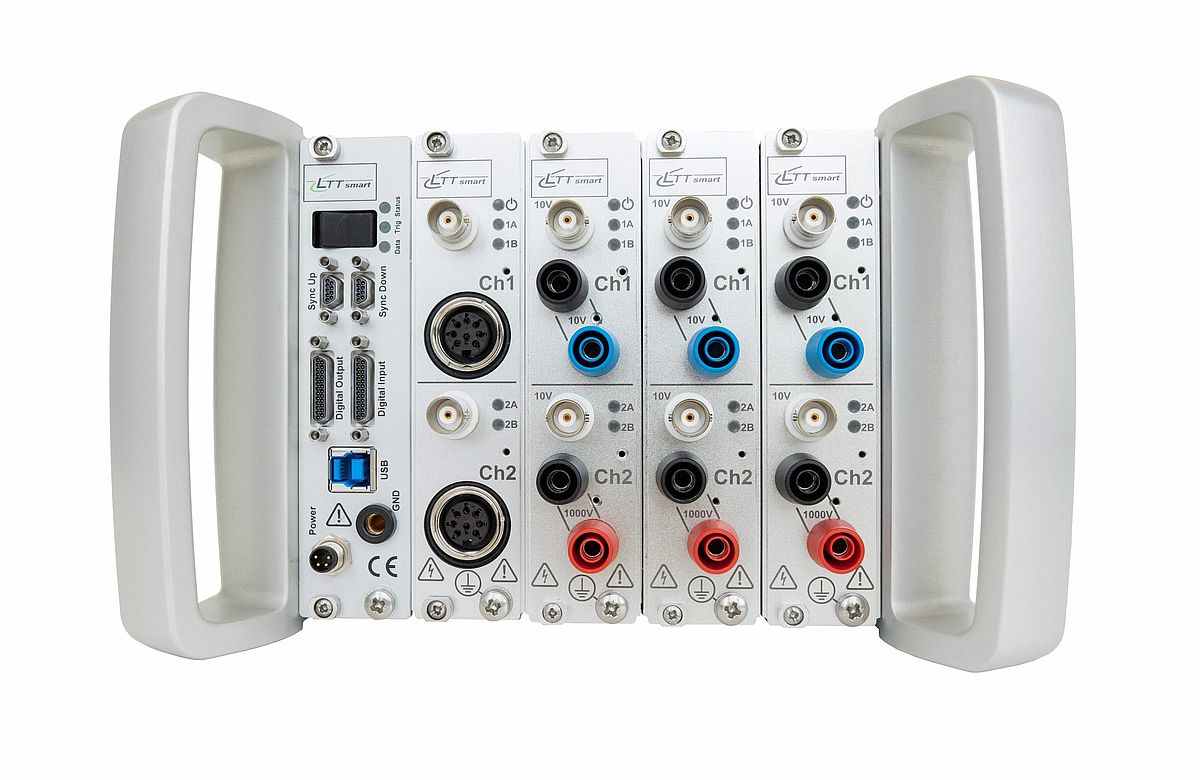
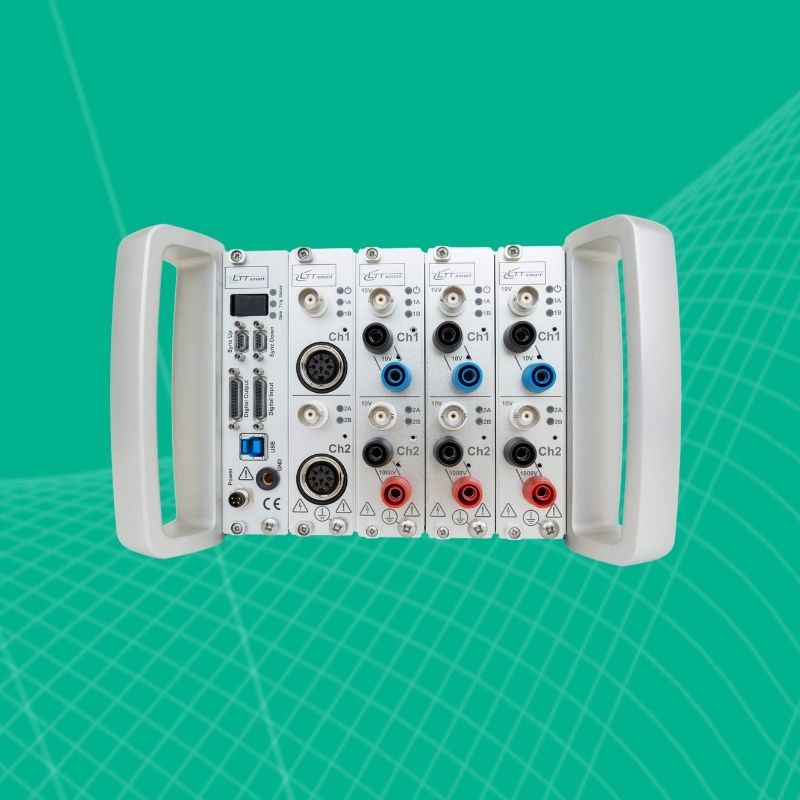
The LTTsmart Power Analyzer was specifically developed to meet these complex power measurement requirements:
It is precisely these technical features that make the LTTsmart so popular with our customers. Are you interested and have questions? Just give us a call at +49 931 359 610 or fill out the contact form. We would also be happy to schedule a demo appointment for you.